Breakout Trading Strategy: How Traders Capture Major Market Moves
BY Panagiotis Philippou
|March 12, 2026The breakout trading strategy is one of the most widely used techniques in technical analysis. It focuses on identifying moments when price moves beyond key support or resistance levels, often signaling the start of a strong market trend.
Traders use breakout strategies to capture large price movements that occur when the balance between buyers and sellers shifts dramatically. When price breaks out of a consolidation range, volatility and trading activity often increase, creating opportunities for traders to enter the market early in a new trend.
Understanding how to apply a breakout trading strategy in forex requires more than simply trading when price crosses a level. Successful traders build structured breakout trading plans that include confirmation signals, risk management rules, and clear entry and exit strategies.
In this guide, you will learn:
- what a breakout trading strategy is
- how breakouts form in financial markets
- how to build a breakout trading plan forex traders can follow
- the most common breakout patterns used by traders
- practical examples of breakout trading setups
By the end of this article, you will have a structured framework for breakout forex strategy planning and understanding how breakout trades fit into a broader trading strategy.
What Is a Breakout Trading Strategy?
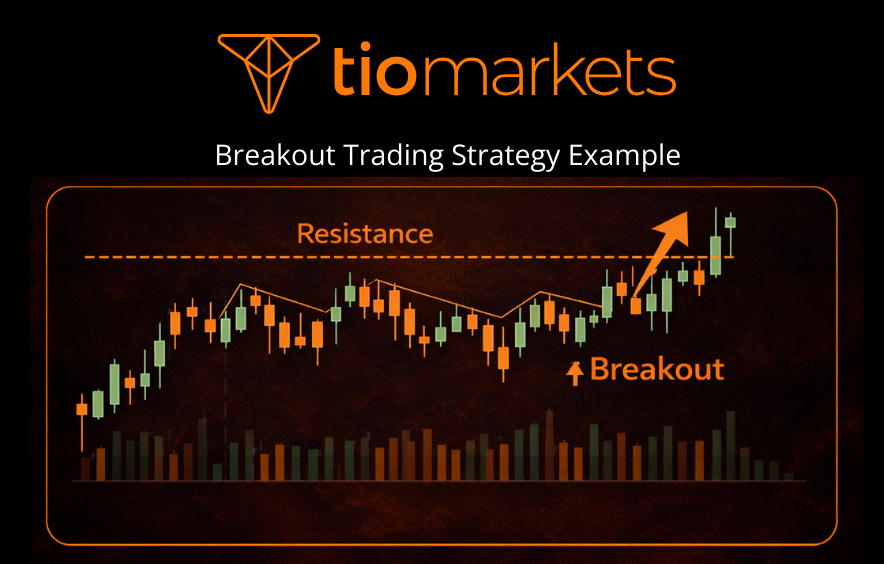
A breakout trading strategy involves entering a trade when price moves beyond a clearly defined support or resistance level. These levels represent areas where price previously struggled to move higher or lower.
When price breaks through one of these barriers, it can signal a shift in supply and demand dynamics within the market.
For example:
- When price breaks above resistance, it suggests strong buying pressure.
- When price breaks below support, it suggests increasing selling pressure.
Breakouts are important because they often mark the beginning of new trends or strong directional movements in financial markets.
This is why breakout trading strategies are widely used in forex, stocks, commodities, and indices.
Why Breakout Trading Works
Markets tend to move in cycles of consolidation and expansion.
During consolidation:
- price moves within a range
- buyers and sellers are relatively balanced
- volatility is low
Eventually, the market builds enough pressure to break out of the range. When that happens, a new trend may begin.
Breakout strategies work because they allow traders to enter early in the momentum phase of the trend.
This concept explains why breakout trading is considered a momentum-based strategy.
Types of Breakouts in Forex Trading
Understanding the types of breakouts is essential when building a breakout trading plan forex traders can rely on consistently.
1. Continuation Breakouts
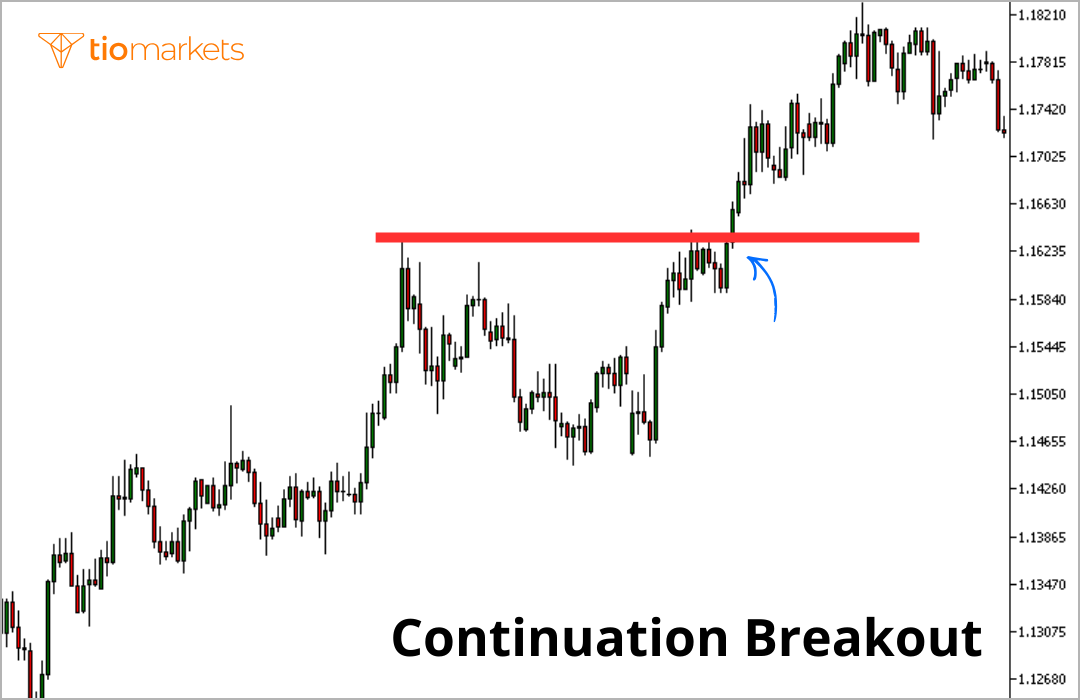
Continuation breakouts occur when price pauses during an existing trend before continuing in the same direction.
Example:
- an uptrend forms
- price consolidates in a small range
- price breaks upward again
This pattern suggests that the trend is likely to continue.
Continuation breakouts are common during strong trending markets.
2. Reversal Breakouts
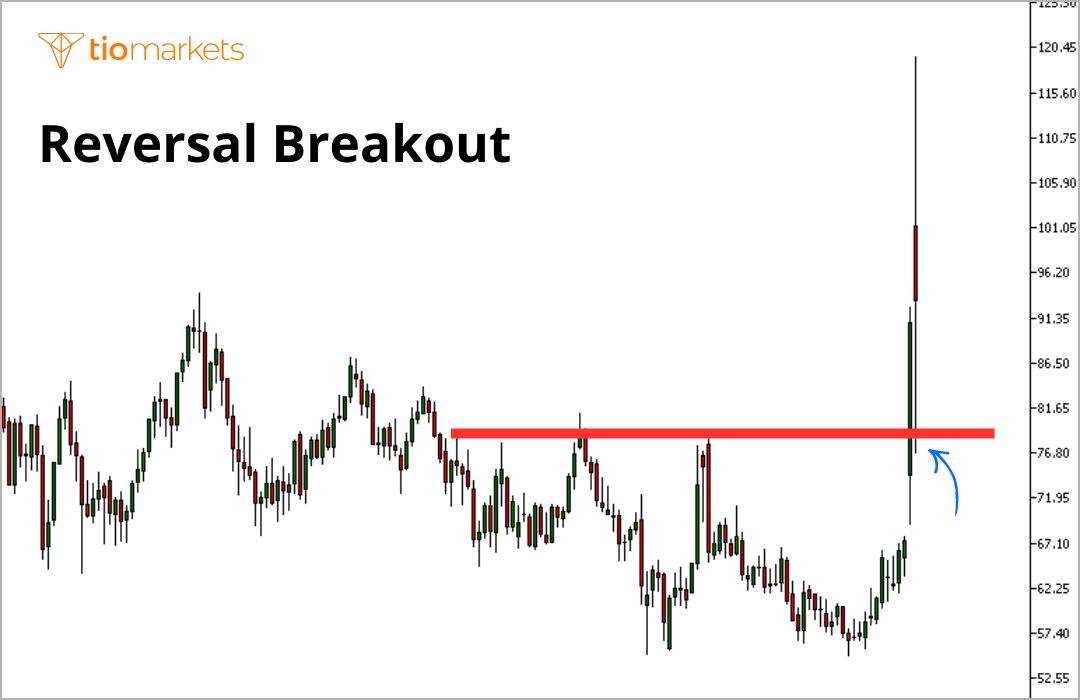
Reversal breakouts occur when price breaks a key level and begins moving in the opposite direction of the previous trend.
Example:
- price repeatedly fails at resistance
- sellers lose control
- price breaks above resistance
This may signal a trend reversal.
Key Components of a Breakout Trading Strategy
A successful breakout strategy typically includes several core elements.
Support and Resistance Levels
Support and resistance levels represent areas where buying or selling pressure previously stopped price movement.
These levels are essential for identifying breakout opportunities because they highlight areas where a potential breakout may occur.
Traders often identify these levels using:
- previous highs and lows
- trendlines
- moving averages
- psychological price levels
Support and resistance zones reflect the balance between supply and demand in financial markets.
Volume and Momentum
Breakouts accompanied by strong volume or momentum are generally considered more reliable.
Increased trading activity often confirms that market participants are reacting to the breakout.
Without momentum confirmation, breakouts are more likely to fail.
Market Structure
Market structure refers to the overall pattern of higher highs, higher lows, lower highs, and lower lows.
Understanding structure helps traders determine whether a breakout represents:
- a continuation pattern
- a trend reversal
Example of a Breakout Trading Setup
Imagine the EUR/USD currency pair trading within a range between 1.0800 and 1.0850.
For several days:
- price touches resistance at 1.0850
- sellers push price back down
- the range remains intact
Eventually, strong buying pressure pushes the price above 1.0850.
At this moment:
- resistance is broken
- traders identify a breakout
- volatility increases
A breakout trader might:
- enter a long position
- place a stop loss below the breakout level
- ride the momentum upward
This type of setup is a classic example of the breakout trading strategy in forex markets.
How to Build a Breakout Trading Plan
A structured plan is critical for consistent results.
Below is a simple framework traders use when building a breakout trading plan forex strategy.
Step 1: Identify the Market Trend
Start by determining whether the market is:
- trending upward
- trending downward
- consolidating
Breakouts from consolidation often produce the strongest moves.
Step 2: Mark Key Support and Resistance Levels
Identify major levels where price repeatedly reacts.
These levels form the basis of breakout setups.
Step 3: Wait for a Confirmed Breakout
Not every movement beyond a level is a valid breakout.
Confirmation may include:
- strong candlestick closes beyond the level
- increased volatility
- high trading volume
Step 4: Plan Your Entry
Traders typically enter a breakout trade in one of two ways:
Immediate Breakout Entry
Enter immediately after price breaks the level.
Break and Retest Entry
Wait for price to return and retest the breakout level before entering.
This approach helps reduce the risk of false breakouts.
Step 5: Define Risk Management Rules
Risk management is critical when using breakout strategies.
Common rules include:
- risk only 1–2% of trading capital per trade
- place stop-loss orders beyond the breakout level
- use favorable risk-to-reward ratios
Common Breakout Trading Patterns
Breakouts often occur within recognizable chart patterns.
Some of the most common include:
Triangle Breakouts
Price consolidates within a triangle pattern before breaking out.
Flag and Pennant Breakouts
Short consolidation periods during strong trends.
Range Breakouts
Price moves outside a horizontal trading range.
Advantages of the Breakout Trading Strategy
| Advantage | Explanation |
| Captures strong trends | Breakouts often occur at the beginning of large moves |
| Works across markets | Applicable to forex, stocks, and commodities |
| Clear entry signals | Support and resistance levels provide clear trade triggers |
Limitations of Breakout Trading
| Limitation | Explanation |
| False breakouts | Price may briefly break a level before reversing |
| Requires patience | Traders must wait for valid setups |
| Volatility risk | Breakouts can produce rapid price swings |
How Traders Avoid False Breakouts
Professional traders often use confirmation tools to reduce the risk of false signals.
These include:
- waiting for a candle close beyond the breakout level
- checking multiple timeframes
- confirming momentum indicators
Another popular approach is the break-and-retest strategy, where traders wait for price to revisit the breakout level before entering the trade.
Tools That Help Traders Use Breakout Strategies
Modern trading platforms offer tools that simplify breakout analysis.
These tools include:
- advanced charting platforms
- technical indicators
- economic calendars
- automated alerts
These features allow traders to analyze multiple asset classes including forex, indices, and commodities.
Breakout Trading Strategy Example (Step-by-Step)
Example scenario:
Currency pair: GBP/USD
- Market consolidates between 1.2500 and 1.2550
- Resistance forms at 1.2550
- Price breaks above resistance with strong momentum
- Traders enter long positions
- Price trends upward toward 1.2700
This type of movement is exactly what breakout traders aim to capture.
Final Thoughts
The breakout trading strategy remains one of the most popular approaches in technical trading because it focuses on capturing strong momentum moves.
By identifying key support and resistance levels and waiting for confirmed breakouts, traders can position themselves early in developing market trends.
However, breakout trading requires discipline, patience, and proper risk management. Traders who combine breakout analysis with structured planning and strong trading psychology are more likely to develop consistent results.
Understanding how to build a breakout trading plan forex traders can apply consistently is an important step toward developing a professional trading approach.
Put all you have learned into action by opening an account here

FAQ
Risk disclaimer: CFDs are complex instruments and come with a high risk of losing money rapidly due to leverage. You should consider whether you understand how CFDs work and whether you can afford to take the high risk of losing your money. Never deposit more than you are prepared to lose. Professional client’s losses can exceed their deposit. Please see our risk warning policy and seek independent professional advice if you do not fully understand. This information is not directed or intended for distribution to or use by residents of certain countries/jurisdictions including, but not limited to, USA & Countries included in the OFAC sanction list. The Company holds the right to alter the aforementioned list of countries at its own discretion.
TIOmarkets offers an exclusively execution-only service. The views expressed are for information purposes only. None of the content provided constitutes any form of investment advice. The comments are made available purely for educational and marketing purposes and do NOT constitute advice or investment recommendation (and should not be considered as such) and do not in any way constitute an invitation to acquire any financial instrument or product. TIOmarkets and its affiliates and consultants are not liable for any damages that may be caused by individual comments or statements by TIOmarkets analysis and assumes no liability with respect to the completeness and correctness of the content presented. The investor is solely responsible for the risk of his/her investment decisions. The analyses and comments presented do not include any consideration of your personal investment objectives, financial circumstances, or needs. The content has not been prepared in accordance with any legal requirements for financial analysis and must, therefore, be viewed by the reader as marketing information. TIOmarkets prohibits duplication or publication without explicit approval.
Join us on social media




Panagiotis is an online trading specialist with extensive experience in forex, indices, and commodities. He enjoys sharing his experience to help traders better understand global financial markets.
Related Posts