Forex Lot Size Explained: A Complete Guide
BY TIOmarkets
|March 11, 2026Lot size is the primary mechanism for controlling risk in forex trading. It determines how much money you gain or lose per pip of price movement, making it the foundation of position sizing and risk management. Without understanding this concept, calculating your actual exposure on any trade becomes guesswork.
This comprehensive forex lot size guide will explain and walk you through everything you need to know about forex lot sizes:
- What lots are and the different types available
- How lot size affects your profit and loss potential
- The relationship between lot size and risk management
- How to calculate appropriate lot sizes for your account
- Common mistakes to avoid
- Guidance for choosing the right lot size
Whether you're a complete beginner or an intermediate trader looking to refine your position sizing approach, this article will provide the knowledge you need to trade with greater confidence and control.
Lets get started
What is a Forex Lot Size - Explained
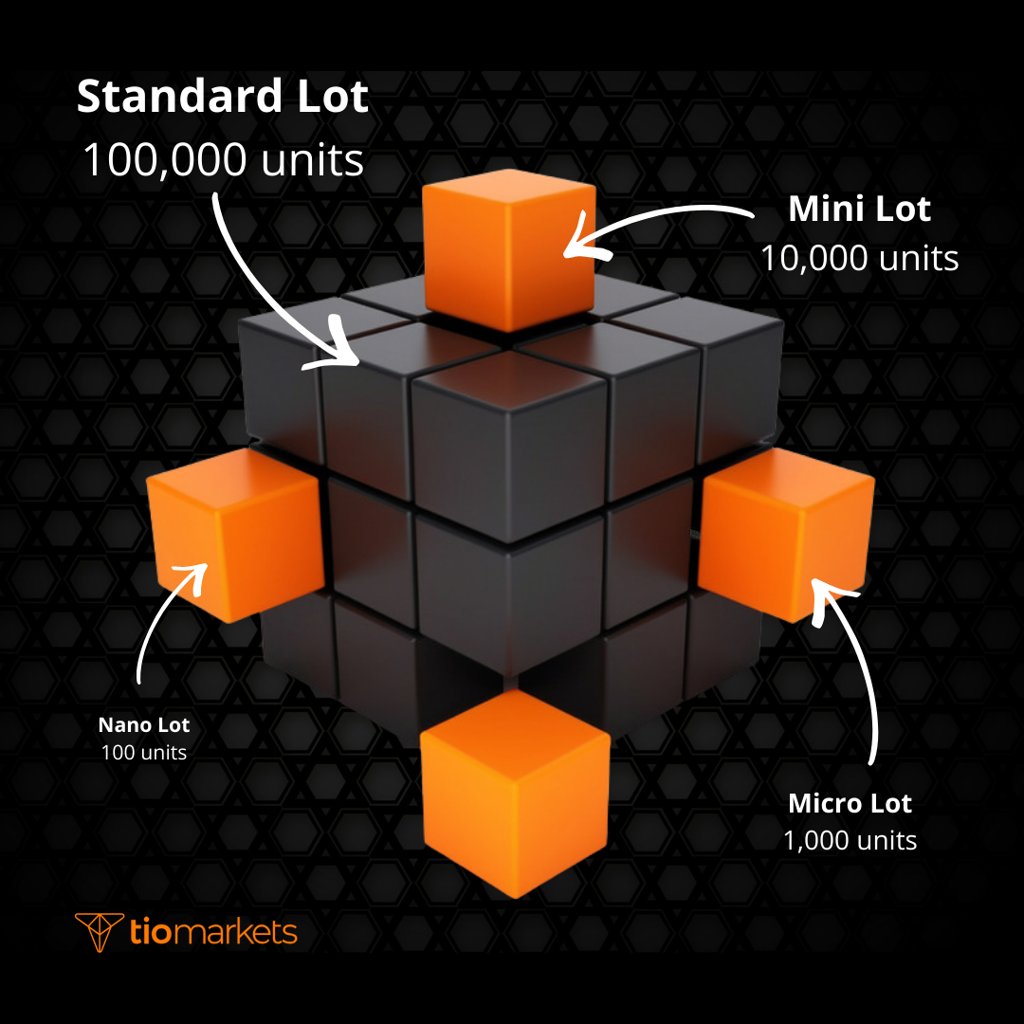
A lot in forex trading is a standardized unit or volume that is the size of your trade. Think of it as the block of currency that traders work with to ensure consistency and clarity across the global forex market.
This standardization creates a common framework that brokers, traders, and platforms all recognize.
| Lot Size | Currency Units |
| Standard Lot | 100,000 units |
| Mini Lot | 10,000 units |
| Mini Lot | 10,000 units |
| Nano Lot | 100 units |
Lot Size vs Position Size
While these terms are closely related, they serve slightly different purposes:
- Lot size refers to the standardized unit of measurement or the specific quantity of currency units in each lot
- Position size refers to the total size of your trade across all open trades, which is expressed in lots
- Position sizing is the strategic process of determining how many lots to trade
Understanding this distinction helps clarify why lot size selection is so critical. It's the mechanism through which you control exactly how much capital you're putting at risk on each trade or in the market in general.
What is important to know is the lot size you choose directly determines your pip value, or how much money you gain or lose for each pip of price movement. Larger lots mean larger pip values, which amplifies both potential profits and potential losses.
This proportional relationship is why lot size sits at the heart of effective risk management..
How Lot Size Affects Your Trading
Understanding the direct relationship between lot size and your trading outcomes is essential for making informed position sizing decisions. The lot size you select determines exactly how much you stand to gain or lose on every trade.
The Relationship Between Lot Size and Risk Exposure
Lot size is the primary mechanism for controlling risk in forex trading. It determines how much money you gain or lose per pip of price movement, making it the foundation of position sizing and risk management.
The fundamental formula is straightforward:
Dollar risk per pip = Lot size × Pip value
This means larger lot sizes create larger dollar amounts at risk for each pip the market moves against you. A trade that moves 100 pips against your position will cost significantly more with a standard lot than with a micro lot, even though the price movement is identical.
Your risk exposure scales proportionally with lot size:
- Double your lot size, and you double your risk per pip
- Halve your lot size, and you halve your risk per pip
This direct relationship gives you precise control over how much capital you're putting at risk on any given trade.
How Lot Size Impacts Potential Profit and Loss
| Lot Size | Pip Value | Profit/Loss for 100 Pips |
| 0.01 | $0.10 | $10 |
| 0.02 | $0.20 | $20 |
| 0.05 | $0.50 | $50 |
| 0.10 | $1.00 | $100 |
| 0.20 | $2.00 | $200 |
| 0.50 | $5.00 | $500 |
| 1.00 | $10.00 | $1,000 |
| 2.00 | $20.00 | $2,000 |
| 5.00 | $50.00 | $5,000 |
Understanding Lot Size Calculations
Calculating the appropriate lot size in forex trading is a skill that separates disciplined traders from those who rely on guesswork. While the mathematics aren't complicated, understanding the principles behind lot size calculations ensures you can apply them consistently across different market conditions.
General Principles of Calculating Appropriate Lot Sizes
The foundation of lot size calculation is risk-based positioning. Rather than asking "how large a position can I afford to open?" The correct question is "how large a position should I open to maintain appropriate risk?"
This method ensures that your position size is always appropriate for your account, regardless of market conditions or the specific trade setup you're taking.
Factors That Influence Lot Size Decisions
Four key variables must be considered together when calculating appropriate lot size:
Account Balance
Your total available capital sets the foundation for all position sizing decisions. Larger accounts can accommodate larger lot sizes while maintaining the same risk percentage. Smaller accounts require smaller lot sizes to avoid excessive exposure.
Your lot size should always reflect your current account balance, not your starting balance or your target balance. This ensures that position sizing remains proportional to your actual capital at all times.
Risk Percentage
This represents the portion of your account you're willing to risk on any single trade. Conservative traders typically risk smaller percentages, while more aggressive traders may accept higher risk per trade.
Regardless of your risk tolerance, this percentage should be defined before calculating lot size, not after. It's a strategic decision that guides your position sizing, not a number you adjust to justify a desired lot size.
Stop Loss Distance
The distance between your entry price and your stop loss (measured in pips) directly affects appropriate lot size. This relationship is inverse:
- The wider your stop loss (more pips), the smaller your lot size should be to maintain the same dollar risk
- The closer your stop loss (fewer pips), the larger lot size you can use while maintaining the same risk level
Pip Value
Different currency pairs have different pip values depending on the quoted currency and exchange rates. The specific currency pair you're trading affects your calculation because pip value varies between pairs.
Your account currency and the quote currency of the pair interact in determining the actual dollar value of each pip movement. This means the same lot size on EUR/USD might have a different dollar risk than the same lot size on GBP/JPY.
Steps to Calculate Lot Size
Effective lot and position sizing follows a logical progression:
- Determine your account balance
- Decide what percentage of that balance you're willing to risk
- Calculate the dollar amount that percentage represents
- Identify your planned stop loss distance in pips
- Calculate the pip value for your chosen currency pair and lot size
- Select the lot size that keeps your potential loss within your predetermined risk amount
Common Lot Size Mistakes to Avoid
Understanding what not to do is often as valuable as knowing the correct approach. These common lot size mistakes have derailed countless trading accounts, and recognizing them helps you avoid the same pitfalls.
Overleveraging with Inappropriate Lot Sizes
This is the most damaging mistake traders make with lot sizes. Overleveraging occurs when traders take positions that are too large relative to their account size, which means even small adverse price movements can wipe out significant portions of their capital or trigger margin calls.
The temptation is understandable. Larger lot sizes mean larger potential profits. But they equally mean larger potential losses. Traders who focus only on the profit potential while ignoring the loss potential are setting themselves up for account destruction.
Overleveraging directly contradicts conservative position sizing guidelines. When you use lot sizes that put excessive capital at risk, you're gambling rather than trading. A few losing trades, which are inevitable in any trading strategy, can eliminate your ability to continue trading.
The solution is straightforward: calculate your lot size based on a predetermined risk percentage that keeps any single loss manageable. If you're consistently tempted to use larger lot sizes than your calculation suggests, that's a warning sign that emotions are overriding discipline.
Ignoring Account Balance When Selecting Lot Size
Some traders select lot sizes based on what they want to earn rather than what their account can sustain. They might decide to trade one standard lot because they want larger profits, without considering whether their account balance supports that exposure level.
This mistake contradicts the principle of proportional position sizing. Your lot size must reflect your actual account balance, not your desired account balance. Trading as if you have more capital than you do is a fast path to having no capital at all.
The solution is simple: always calculate lot size based on your current account balance and your predetermined risk percentage. Let the math determine your position size, not your emotions or aspirations. If the calculated lot size seems too small to generate meaningful profits, the issue isn't your calculation—it's your account size or expectations.
Using the Same Lot Size Regardless of Market Conditions
Markets are not static, volatility fluctuates, liquidity varies, and different trading setups carry different risk profiles. Using identical lot sizes across all conditions ignores these realities.
During high-volatility periods, the same lot size carries more risk because price swings are larger. During low-liquidity periods, slippage and wider spreads can increase actual losses beyond expected levels. Failing to adjust lot size for these conditions means accepting inconsistent risk exposure.
This mistake contradicts the principle of adjusting for stop loss distance and market conditions. Effective position sizing requires ongoing assessment and adjustment, not a one-size-fits-all approach.
The solution is to reassess market conditions before each trade and adjust your lot size accordingly. If volatility is elevated, consider reducing your lot size to maintain consistent dollar risk despite larger pip movements. If liquidity is thin, factor in the potential for slippage when calculating your position size.
Failing to Adjust Lot Size Based on Stop Loss Distance
This is perhaps the most common calculation error among developing traders. They determine a lot size they're comfortable with and use it regardless of whether their stop loss is 15 pips or 150 pips away.
The mathematics make the problem clear: if you use the same lot size with a 150-pip stop as you would with a 15-pip stop, you're risking ten times more capital on the wider stop trade. This creates wildly inconsistent risk across your trades.
This mistake directly contradicts the inverse relationship between stop distance and lot size. Proper position sizing requires smaller lot sizes when stops are wider and allows larger lot sizes when stops are tighter, always maintaining consistent dollar risk per trade.
The solution is to calculate lot size fresh for every trade based on the specific stop loss distance that trade requires. Never assume yesterday's lot size is appropriate for today's setup. The stop loss distance should be a primary input in your lot size calculation, not an afterthought.
Choosing the Right Lot Size for Your Account
Selecting appropriate lot sizes isn't a one-time decision, it's an ongoing process that should adapt based on several factors. Here's how to make informed lot size choices.
Current Account Balance
Your account balance is the starting point for every lot size calculation. Not your starting balance, not your peak balance, not your target balance—your current balance. This ensures your position sizing always reflects your actual available capital.
If your account has grown, your lot size can increase proportionally. If your account has shrunk, your lot size must decrease proportionally. This dynamic adjustment is essential for maintaining consistent risk management as your account fluctuates.
Defined Risk Tolerance
Before calculating lot size, you need to know what percentage of your account you're willing to risk per trade. This should be a deliberate decision made when you're thinking clearly, not an in-the-moment choice influenced by excitement or fear.
Higher risk tolerance translates to larger lot sizes. Lower risk tolerance means smaller lot sizes. But risk tolerance should be balanced with sound risk management principles—being willing to risk more doesn't mean you should. Conservative risk percentages preserve capital through losing streaks and maintain the psychological stability necessary for disciplined trading.
Stop Loss Requirements
Different trade setups require different stop loss distances. A breakout trade might need a tight stop, while a swing trade might require room for normal price fluctuation. Your lot size must adjust accordingly to maintain consistent risk.
The inverse relationship between stop loss distance and lot size is fundamental: wider stops require smaller lots, tighter stops allow larger lots. This adjustment ensures that your dollar risk remains consistent regardless of the specific pip distance to your stop.
Currency Pair Characteristics
Different pairs have different pip values and volatility profiles. A lot size appropriate for EUR/USD might be inappropriate for GBP/JPY due to differences in pip value and typical price movement.
Consider the specific characteristics of each pair when calculating position size. Higher volatility pairs may warrant smaller lot sizes to account for larger typical price swings. Pairs with different pip values require adjustment to maintain consistent dollar risk.
Conclusion on Forex Lot Sizes
Understanding forex lot sizes is fundamental to successful trading. The lot size you select determines your risk exposure per pip, your potential profit and loss on every trade, and ultimately whether your trading approach is sustainable over the long term.
Position sizing through appropriate lot selection is critical and essential. Traders who master this skill give themselves solid foundations for long-term success. Those who neglect it often don't survive long enough to develop their trading skills.
Practice calculating appropriate lot sizes before risking real capital or use lot size and pip value calculators. Use demo accounts to experience how different lot sizes affect your profit and loss. Develop the discipline of consistent position sizing that will serve you throughout your trading career.
Ready to implement your knowledge? Open your account with TIOmarkets and trade with standard, mini, micro and nano lots.

FAQ
Risk disclaimer: CFDs are complex instruments and come with a high risk of losing money rapidly due to leverage. You should consider whether you understand how CFDs work and whether you can afford to take the high risk of losing your money. Never deposit more than you are prepared to lose. Professional client’s losses can exceed their deposit. Please see our risk warning policy and seek independent professional advice if you do not fully understand. This information is not directed or intended for distribution to or use by residents of certain countries/jurisdictions including, but not limited to, USA & Countries included in the OFAC sanction list. The Company holds the right to alter the aforementioned list of countries at its own discretion.
TIOmarkets offers an exclusively execution-only service. The views expressed are for information purposes only. None of the content provided constitutes any form of investment advice. The comments are made available purely for educational and marketing purposes and do NOT constitute advice or investment recommendation (and should not be considered as such) and do not in any way constitute an invitation to acquire any financial instrument or product. TIOmarkets and its affiliates and consultants are not liable for any damages that may be caused by individual comments or statements by TIOmarkets analysis and assumes no liability with respect to the completeness and correctness of the content presented. The investor is solely responsible for the risk of his/her investment decisions. The analyses and comments presented do not include any consideration of your personal investment objectives, financial circumstances, or needs. The content has not been prepared in accordance with any legal requirements for financial analysis and must, therefore, be viewed by the reader as marketing information. TIOmarkets prohibits duplication or publication without explicit approval.
Join us on social media




Behind every blog post lies the combined experience of the people working at TIOmarkets. We are a team of dedicated industry professionals and financial markets enthusiasts committed to providing you with trading education and financial markets commentary. Our goal is to help empower you with the knowledge you need to trade in the markets effectively.
Related Posts