Is Silver a Good Investment?
BY TIOmarkets
|March 13, 2026Is silver a good investment? The answer depends on your individual circumstances, risk tolerance, investment timeline, and financial objectives. Silver can be a suitable investment for some traders and investors, but it's neither universally "good" nor "bad". It’s appropriateness is entirely context-dependent.
Silver occupies a unique position in the investment world. Unlike purely monetary assets, silver serves dual purposes as both a precious metal with historical value and an industrial commodity with practical applications. This dual nature creates distinct opportunities and challenges that every potential investor should understand before committing capital.
This guide will help you evaluate whether silver is a good investment and belongs in your portfolio. We'll examine what makes silver unique, the factors that influence it’s price, potential benefits and risks, and how to determine if it aligns with your investment goals.
Continue reading to learn whether silver is a good investment or not.
Silver historical price performance
Below is a 5-year period historical performance table for Silver (XAGUSD) from 1970–2025.
Values are approximate spot price per troy ounce in USD at the start and end of each period and the total return for the period.
Past performance is not a reliable indicator of future performance.
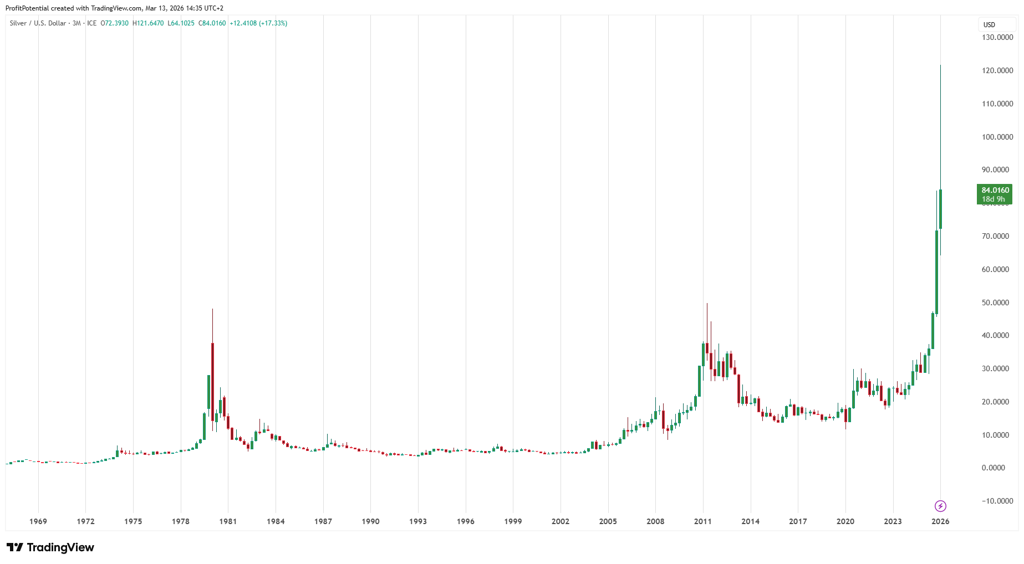
| Period | Start Price ($/oz) | End Price ($/oz) | 5-Year Return |
| 1970–1975 | 1.63 | 4.15 | 154.6% |
| 1975–1980 | 4.15 | 15.80 | 280.7% |
| 1980–1985 | 15.80 | 5.80 | -63.3% |
| 1985–1990 | 5.80 | 4.19 | -27.8% |
| 1990–1995 | 4.19 | 5.14 | 22.7% |
| 1995–2000 | 5.14 | 4.60 | -10.5% |
| 2000–2005 | 4.60 | 8.82 | 91.7% |
| 2005–2010 | 8.82 | 30.91 | 250.5% |
| 2010–2015 | 30.91 | 13.85 | -55.2% |
| 2015–2020 | 13.85 | 26.36 | 90.3% |
| 2020–2025 | 26.36 | 70.46 | 167.3% |
What Makes Silver Unique as an Investment
Silver stands apart from other investment options because of its dual nature. It functions simultaneously as a precious metal, valued for its historical significance and store of value characteristics, and as an industrial commodity with real-world applications across multiple sectors.
The Dual Nature of Silver
This combination of precious metal and industrial commodity creates a distinctive investment profile. On one hand, silver shares characteristics with gold as a traditional store of value that investors have turned to for centuries. On the other hand, silver's extensive industrial applications mean its price responds to manufacturing demand, technological developments, and economic activity in ways that purely monetary metals do not.
This dual nature differentiates silver from investments like gold, which functions primarily as a monetary metal. While gold's value derives largely from its perceived role as a safe-haven asset and store of wealth, silver's value is influenced by both investment demand and practical industrial consumption.
Silver's Role in Investment Portfolios
For portfolio construction, silver can potentially serve several functions:
- Diversification tool: An asset that may behave differently from stocks and bonds during various market conditions.
- Inflation hedge: A potential hedge against inflation or currency fluctuations, given its historical role as a tangible store of value.
- Accessible entry point: Silver typically has a lower price point than gold, meaning investors with limited capital can gain exposure to precious metals without the higher costs associated with gold purchases.
How Silver Differs from Other Investments
Unlike stocks or bonds, silver generates no passive income. There are no dividends, interest payments, or rental income, any return comes solely from price appreciation. This characteristic is important to understand when comparing silver to income-generating investments.
Silver also differs from purely financial assets in that physical silver requires storage and security considerations. Whether you're holding coins, bars, or other forms of physical silver, you'll need to account for the practical aspects of safeguarding a tangible asset.
The industrial demand component also sets silver apart. Key industries including solar panel manufacturing, electronics production, and medical applications all consume significant quantities of silver. This means silver prices can be influenced by:
- Technological trends
- Manufacturing cycles
- Industrial economic activity
These are factors that don't typically affect purely monetary assets.
Understanding these unique characteristics is essential for evaluating whether silver fits your investment approach. The same features that make silver attractive to some investors may make it less suitable for others, depending on individual goals and circumstances.
Potential Benefits of Investing in Silver
While silver investment carries risks that we'll examine later, there are several potential benefits that attract investors to this precious metal. Understanding these potential advantages can help you evaluate whether silver aligns with your investment objectives.
Portfolio Diversification
One of the primary reasons investors consider silver is its potential role in portfolio diversification. The principle behind diversification is straightforward: holding assets that don't move in perfect correlation with each other may help reduce overall portfolio volatility.
Silver's unique characteristics. its dual nature as both precious metal and industrial commodity, mean it may respond differently to market conditions than traditional stocks and bonds. This potential for different behaviour during various economic environments is what makes silver interesting from a diversification perspective.
However, it's important to note that diversification does not guarantee profits or protect against losses. Past performance is not a reliable indicator of future results, and correlations between asset classes can change over time.
Inflation Hedge Potential
Silver has historically been considered a potential hedge against inflation. The reasoning is that tangible assets with intrinsic value may hold their purchasing power better than paper currencies during inflationary periods.
As a physical commodity with both monetary and industrial value, silver may offer some protection when currency values decline. However, this relationship is not guaranteed, and silver's effectiveness as an inflation hedge can vary depending on the specific economic circumstances.
Investors seeking inflation protection should consider silver as one potential vehicle among many, rather than relying on it exclusively for this purpose.
Industrial Demand Drivers
Unlike gold, which derives most of its value from investment and jewellery demand, silver benefits from substantial industrial consumption. This industrial demand provides a fundamental floor of sorts—silver will continue to be needed for manufacturing regardless of investment sentiment.
Key industrial demand drivers include:
- Renewable energy: Solar panel production requires significant silver quantities, and the ongoing transition toward green energy may support long-term demand.
- Electronics: The proliferation of electronic devices continues to drive silver consumption.
- Medical technology: Silver's unique properties ensure ongoing demand from healthcare applications.
These industrial applications mean silver demand isn't solely dependent on investor interest, potentially providing more stable underlying support for the metal's value.
Tangible Asset Ownership
For investors who value holding physical assets, silver offers the opportunity to own something tangible. Unlike stocks, bonds, or digital assets, physical silver is a real commodity you can hold, store, and transport.
This tangibility appeals to investors who:
- Prefer assets that exist outside the financial system
- Want diversification into physical commodities
- Value the historical significance of precious metal ownership
However, physical ownership also comes with practical considerations around storage and security that we'll address in the risks section.
Risks and Challenges of Silver Investment
No investment is without risk, and silver is no exception. Understanding the potential downsides is just as important as recognizing the benefits. Here are the key risks and challenges you should consider before investing in silver.
Price Volatility
Silver is known for significant price volatility, often more pronounced than gold or other precious metals. Prices can move sharply in both directions over relatively short periods, driven by shifts in investor sentiment, speculation, and changing market conditions.
This volatility creates both opportunity and risk:
- Opportunity: Sharp price movements can create potential profit opportunities for traders who correctly anticipate direction.
- Risk: The same volatility can lead to substantial losses if prices move against your position.
Investors with lower risk tolerance may find silver's price swings uncomfortable. If you're considering silver, honestly assess whether you can handle significant short-term fluctuations in your investment value without making emotional decisions.
Storage Considerations
If you choose to invest in physical silver, you'll need to address practical storage and security concerns. Unlike stocks or ETFs that exist as digital entries, physical silver requires:
- Secure storage space (home safe, bank safe deposit box, or professional vault)
- Insurance against theft or damage
- Ongoing costs associated with maintaining secure storage
These storage considerations add complexity and potential expense to physical silver ownership. The costs of secure storage can erode returns over time, particularly for smaller positions where storage fees represent a larger percentage of the investment value.
No Passive Income Generation
Unlike dividend-paying stocks, interest-bearing bonds, or rental properties, silver generates no passive income. Your only potential return comes from price appreciation, selling at a higher price than you paid.
This characteristic has important implications:
- You cannot compound returns through reinvested income
- Holding silver has an opportunity cost compared to income-generating investments
- Your entire return depends on timing your purchase and sale correctly
For investors who rely on investment income or prefer assets that generate regular cash flow, silver's lack of passive income may be a significant drawback.
Market Speculation Factors
Silver markets can be heavily influenced by speculation and momentum trading. Large institutional traders, hedge funds, and speculative investors can move prices in ways that may not reflect underlying supply and demand fundamentals.
This speculative activity means:
- Prices can become disconnected from fundamental value
- Sharp reversals can occur when speculative positions unwind
- Timing the market becomes extremely difficult
Investors should be aware that silver prices don't always move rationally or predictably. Speculative forces can create both opportunities and traps for those trying to profit from price movements.
Realistic Loss Scenarios
It's important to acknowledge that investors can and do lose money in silver. Realistic scenarios where losses occur include:
- Buying at peak prices: Purchasing during periods of high investor enthusiasm, then experiencing price declines.
- Forced selling during downturns: Needing to liquidate positions during unfavourable market conditions.
- Storage costs exceeding gains: For physical silver, ongoing storage expenses can erode or eliminate modest price gains.
- Opportunity cost: Missing out on returns from other investments that performed better during your holding period.
These risks are real and should factor into your decision-making process. Silver investment is not appropriate for everyone, and understanding these challenges is essential for making an informed choice.
How to Invest in Silver
If you've evaluated the benefits and risks and decided silver may fit your investment objectives, several methods exist for gaining exposure. There are several approaches to how to trade or invest in silver and each has distinct characteristics, advantages, and drawbacks.
Physical Silver
Owning physical silver means purchasing actual metal in the form of coins, bars, or rounds. This is the most direct form of silver ownership.
Advantages:
- Tangible asset you can hold and store
- No counterparty risk (you own the metal directly)
- Appeals to investors who prefer physical commodity ownership
Disadvantages:
- Storage and security requirements
- Potential insurance costs
- Less liquid than financial instruments
- Premiums over spot price when purchasing
Physical silver suits investors who value tangible ownership and are willing to manage the practical aspects of storing precious metals.
Silver ETFs
Exchange-traded funds (ETFs) offer exposure to silver prices without the need to store physical metal. These funds trade on stock exchanges like regular shares.
Advantages:
- Easy to buy and sell through standard brokerage accounts
- No storage concerns
- High liquidity
- Lower transaction costs than physical silver
Disadvantages:
- You don't own physical metal directly
- Management fees reduce returns over time
- Counterparty risk with the fund provider
ETFs suit investors who want silver exposure through familiar financial instruments without the complications of physical ownership.
Silver Mining Stocks
Investing in companies that mine silver provides indirect exposure to silver prices. Mining stock performance depends on both silver prices and company-specific factors.
Advantages:
- Potential for dividends (unlike physical silver)
- Leverage to silver prices (mining profits can increase faster than silver prices)
- Easy to trade through standard brokerage accounts
Disadvantages:
- Company-specific risks (management, operations, debt levels)
- Not a pure play on silver prices
- Stock market risks in addition to silver price risks
Mining stocks suit investors comfortable with equity investing who want silver exposure combined with potential income and company growth.
Silver CFDs at TIOmarkets
Contracts for Difference (CFDs) allow traders to speculate on silver price movements without owning the underlying asset. This approach is available through online forex and CFD brokers.
Advantages:
- Ability to profit from both rising and falling prices
- Leverage amplifies potential returns (and losses)
- No storage requirements
- Can trade with smaller capital amounts
Disadvantages:
- Leverage significantly increases risk
- Not suitable for long-term holding due to overnight financing costs
- Requires active management and trading knowledge
- Potential for losses exceeding initial investment
Silver CFD trading suits experienced traders who understand leverage risks and want to actively trade silver price movements rather than hold long-term positions.
Comparing the Approaches
| Method | Ownership Type | Storage Required | Leverage Available | Best For |
| Physical Silver | Direct | Yes | No | Long-term holders valuing tangible assets |
| Silver ETFs | Indirect | No | No | Investors wanting simple, liquid exposure |
| Mining Stocks | Indirect | No | Yes | Those comfortable with equity risk |
| Silver CFDs | None (speculation) | No | Yes | Active traders comfortable with leverage and short term speculation |
The right approach depends on your investment goals, risk tolerance, time horizon, and how actively you want to manage your investment. Many investors use a combination of methods to achieve their desired silver exposure.
Is Silver Right for Your Investment Goals?
Determining whether silver belongs in your portfolio requires honest self-assessment. Rather than asking "is silver a good investment?" In absolute terms, the more useful question is "is silver a good investment for me, given my specific circumstances?"
Here's a framework for evaluating whether silver aligns with your investment objectives.
Assess Your Risk Tolerance
Silver's price volatility is a defining characteristic. Before investing, honestly evaluate your comfort with significant price swings.
Questions to consider:
- How would you react if your silver investment dropped 20% or more in a short period?
- Can you hold through extended periods of poor performance without panic selling?
- Are you investing money you can afford to lose without affecting your financial security?
If you have low risk tolerance or would be significantly stressed by sharp price declines, silver may not be appropriate for you—or you may want to limit your allocation to a small percentage of your overall portfolio.
Consider Your Investment Timeline
Your time horizon significantly impacts whether silver makes sense for your situation.
Shorter timelines (under 5 years):
- Silver's volatility creates greater uncertainty over shorter periods
- You may be forced to sell during unfavourable market conditions
- Price fluctuations have less time to smooth out
Longer timelines (5+ years):
- More time for price volatility to average out
- Greater ability to wait for favourable selling conditions
- Better suited to silver's characteristics as a long-term store of value
Generally, silver is more appropriate for investors with longer time horizons who can weather short-term volatility without needing to liquidate their positions.
Evaluate Your Portfolio Objectives
Consider how silver fits within your broader investment strategy.
Diversification goals:
- Does your portfolio lack exposure to commodities or precious metals?
- Are you seeking assets that may behave differently from your existing holdings?
- Would silver add meaningful diversification, or do you already have similar exposure?
Income requirements:
- Do you need your investments to generate regular income?
- Can you accept an asset that produces no dividends or interest?
- Is price appreciation alone sufficient for your goals?
Inflation concerns:
- Are you specifically seeking potential inflation protection?
- How important is this objective relative to other goals?
- Are you comfortable with silver's imperfect track record as an inflation hedge?
Determine Appropriate Capital Allocation
Even if silver suits your risk tolerance and objectives, the amount you allocate matters significantly.
Questions to consider:
- What percentage of your portfolio can you commit to a volatile, non-income-producing asset?
- Are you investing money you can afford to lose entirely?
- Does your proposed allocation leave you adequately diversified across other asset classes?
Most financial guidance suggests keeping precious metals allocations modest relative to total portfolio size.
Self-Assessment Summary
Silver may be appropriate for you if:
- You have moderate to high risk tolerance
- Your investment timeline is long-term (5+ years)
- You're seeking portfolio diversification
- You don't require income from your investments
- You're interested in exposure to industrial demand trends
- You're investing capital you can afford to lose
Silver may not be appropriate for you if:
- You have low risk tolerance
- You need access to your capital in the short term
- You require regular investment income
- You're uncomfortable with significant price volatility
- You're investing money you cannot afford to lose
Remember that this self-assessment is a starting point, not a definitive answer. Consider consulting with a qualified financial advisor who can evaluate your complete financial situation before making investment decisions.
How to Trade Silver CFDs with TIOmarkets
For traders interested in actively trading silver price movements rather than holding long-term positions, CFD (Contract for Difference) trading offers an alternative approach. TIOmarkets is an online forex and CFD broker that provides access to silver CFDs.
What is Silver CFD Trading?
When you trade silver CFDs, you're speculating on silver price movements without owning the physical metal. This allows you to potentially profit from both rising and falling prices—you can "go long" if you expect prices to rise or "go short" if you expect prices to fall.
CFD trading uses leverage, which means you can control larger positions with smaller amounts of capital. This can significantly amplify your potential to profit, but it also increases the risk of loss when not used responsibly. Losses can exceed your initial deposit.
Trading Silver with TIOmarkets
TIOmarkets offers silver CFD trading through their platform, allowing traders to access silver markets with competitive trading conditions. The platform provides tools for technical analysis, order management, and risk control.
Silver CFD trading is best suited to individuals who understand leverage risks and want to actively speculate on silver price movements.
Is Silver a Good Investment?
It depends on your individual circumstances.
Silver offers unique characteristics that may benefit certain investors. Silver presents significant challenges as it has no passive income generating ability and storage considerations need to be taken into account for physical holdings. Silver is susceptible to speculative market forces and these risks mean silver is not appropriate for everyone.
You should evaluate your risk tolerance, investment timeline, portfolio objectives, and available capital.
If you determine that silver fits your investment profile, multiple approaches exist, from physical ownership to ETFs, mining stocks, and through CFD trading. Each method has distinct advantages and drawbacks that should factor into your choice.
For those interested in actively trading silver price movements, TIOmarkets offers silver CFD trading.

FAQ
Risk disclaimer: CFDs are complex instruments and come with a high risk of losing money rapidly due to leverage. You should consider whether you understand how CFDs work and whether you can afford to take the high risk of losing your money. Never deposit more than you are prepared to lose. Professional client’s losses can exceed their deposit. Please see our risk warning policy and seek independent professional advice if you do not fully understand. This information is not directed or intended for distribution to or use by residents of certain countries/jurisdictions including, but not limited to, USA & Countries included in the OFAC sanction list. The Company holds the right to alter the aforementioned list of countries at its own discretion.
TIOmarkets offers an exclusively execution-only service. The views expressed are for information purposes only. None of the content provided constitutes any form of investment advice. The comments are made available purely for educational and marketing purposes and do NOT constitute advice or investment recommendation (and should not be considered as such) and do not in any way constitute an invitation to acquire any financial instrument or product. TIOmarkets and its affiliates and consultants are not liable for any damages that may be caused by individual comments or statements by TIOmarkets analysis and assumes no liability with respect to the completeness and correctness of the content presented. The investor is solely responsible for the risk of his/her investment decisions. The analyses and comments presented do not include any consideration of your personal investment objectives, financial circumstances, or needs. The content has not been prepared in accordance with any legal requirements for financial analysis and must, therefore, be viewed by the reader as marketing information. TIOmarkets prohibits duplication or publication without explicit approval.
Join us on social media




Behind every blog post lies the combined experience of the people working at TIOmarkets. We are a team of dedicated industry professionals and financial markets enthusiasts committed to providing you with trading education and financial markets commentary. Our goal is to help empower you with the knowledge you need to trade in the markets effectively.
Related Posts